
Umuturamugina (Triangle Tops)
Blighia unijugata
A dioecious forest tree to 30m (occasionally 35m) with a dense, shady, rounded crown similar to a mango tree. Bark is grey to dark green with horizontal ridges, and the distinctive top-shaped, 3-lobed fruit capsule turns bright pink-to-red when ripe.
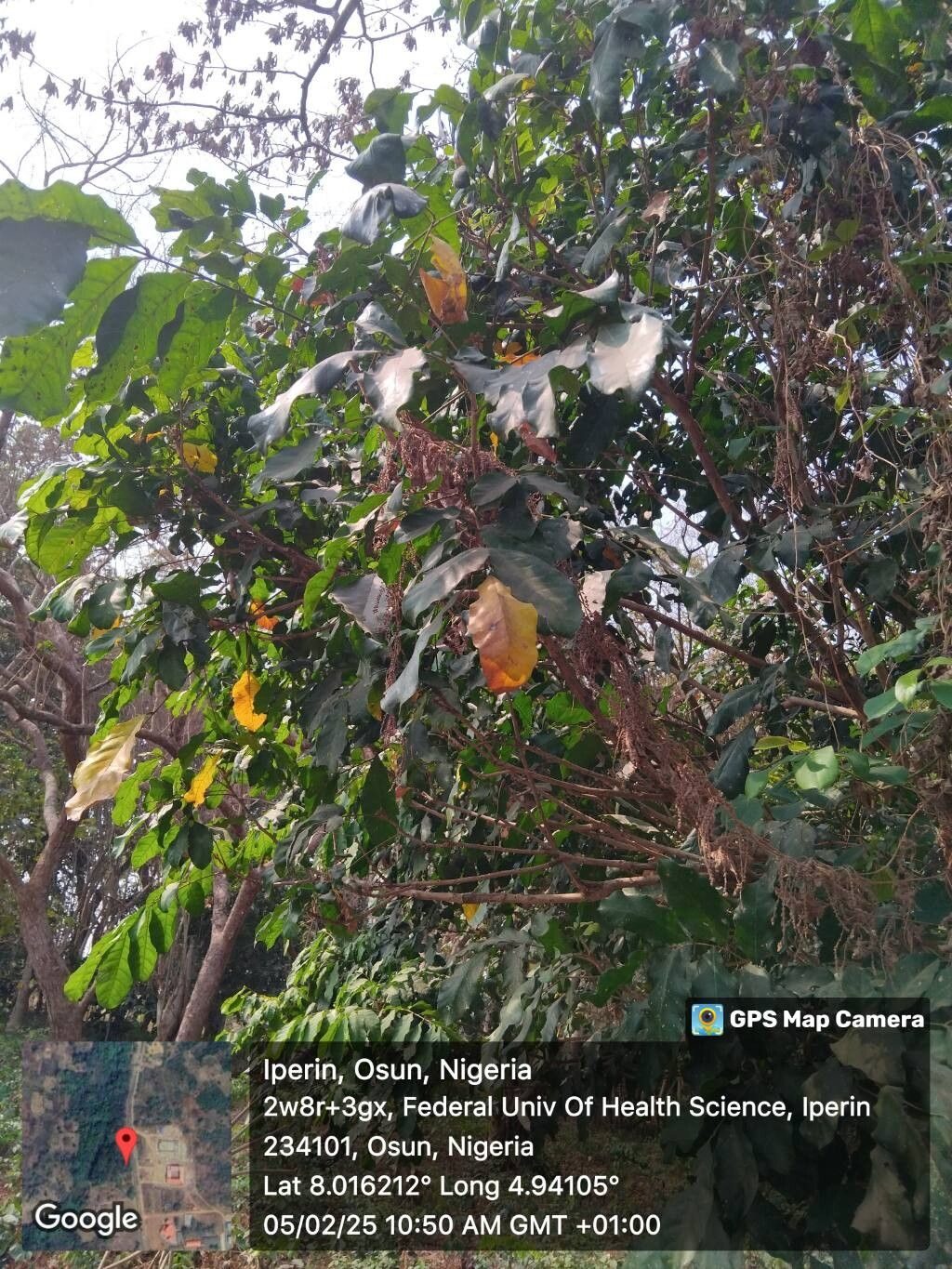
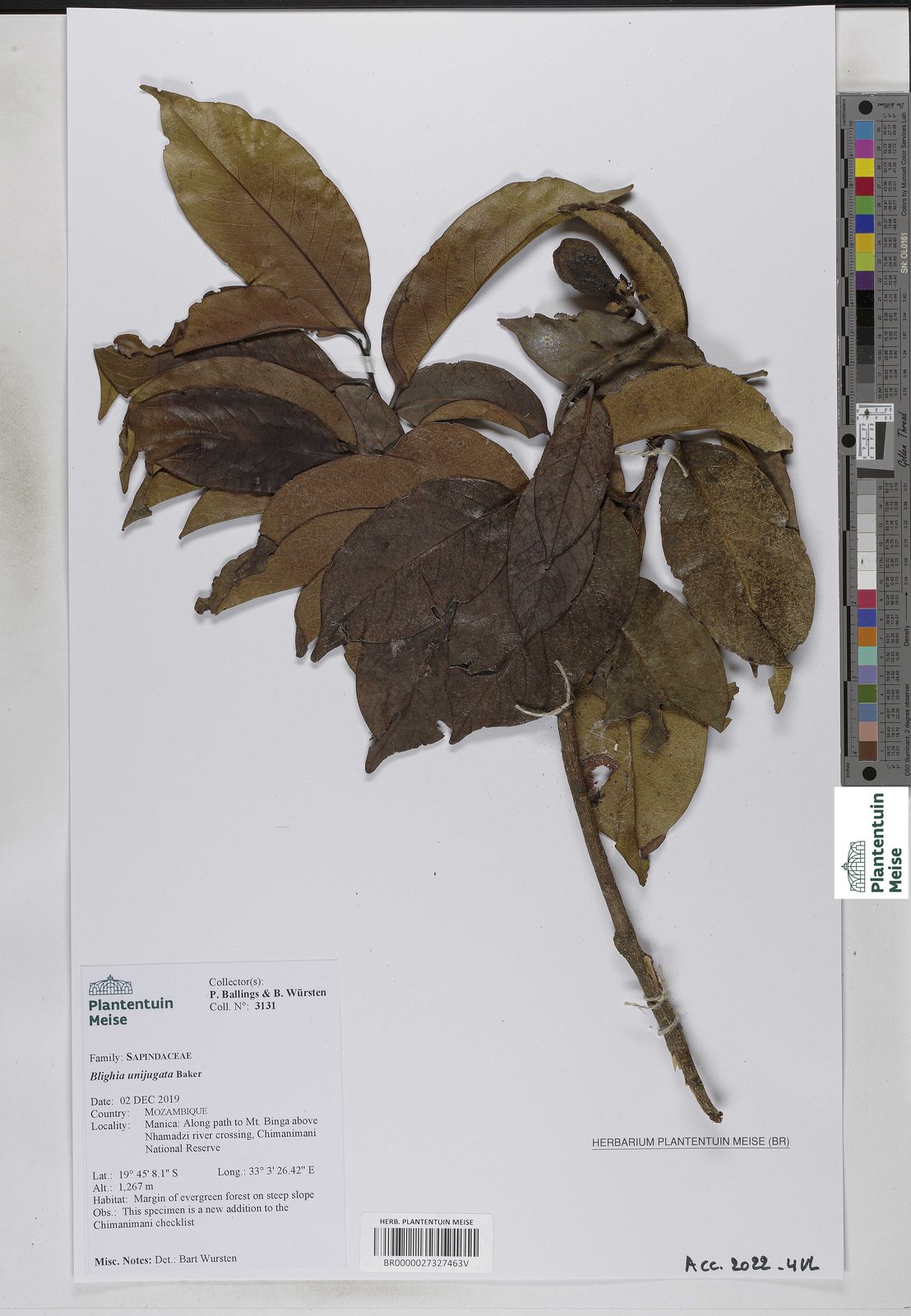
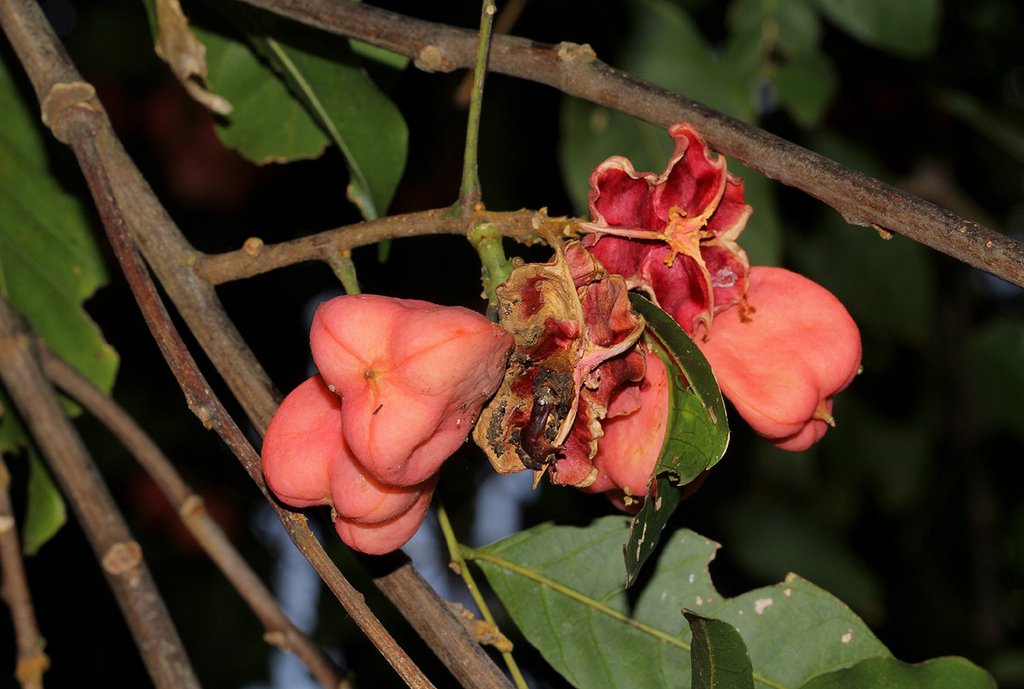
- Kinyarwanda name
- Umuturamugina
- English name
- Triangle Tops
- Scientific name
- Blighia unijugata
- Family
- Sapindaceae
Habitat
Moist evergreen forest, semi-deciduous forest, riverine forest and wooded grassland, up to 1,900m; often a coloniser of secondary vegetation.
Distribution
Guinea-Bissau east to Ethiopia and Kenya, south through DR Congo to Angola, Zimbabwe, Mozambique and coastal KwaZulu-Natal; confirmed present in Rwanda.
Uses
Timber, light construction, flooring, joinery, furniture, mine props, turnery/carving, firewood/charcoal; village and coffee shade tree, and honeybee forage. Traditional medicine: leaves, bark and roots used for arthritis/rheumatism-type joint pain ('Rubagimpande'), kidney pain and joint stiffness, and reputedly to aid childbirth.
Ecological importance
Flowers are an important nectar/pollen source for honeybees; larval host plant for the Gold-banded Forester butterfly; fruit/aril eaten by birds and primates, dispersing seed.
Ibisobanuro
Kiravura. Mu buvuzi gakondo bakivuza Rubagimpande, ububabare bw'impyiko, no kumugara kw'ingingo zinyuranye z'umubiri. Icyo giti gifite mu mababi, igishiswa ndetse no mu mimizi yacyo imiti ikoreshwa mu kabyaza abagore.