
Umusave (Nile Tulip)
Markhamia lutea
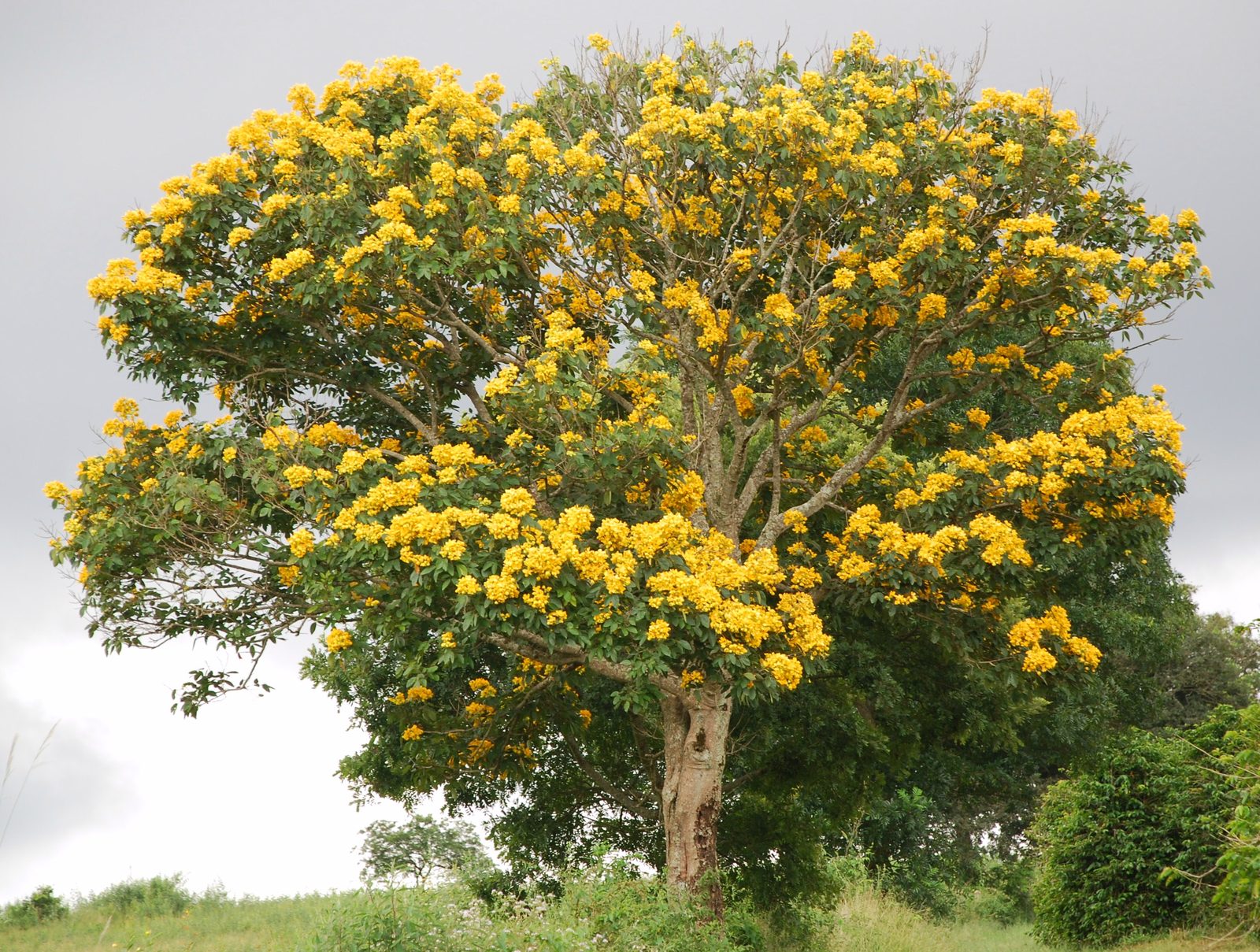
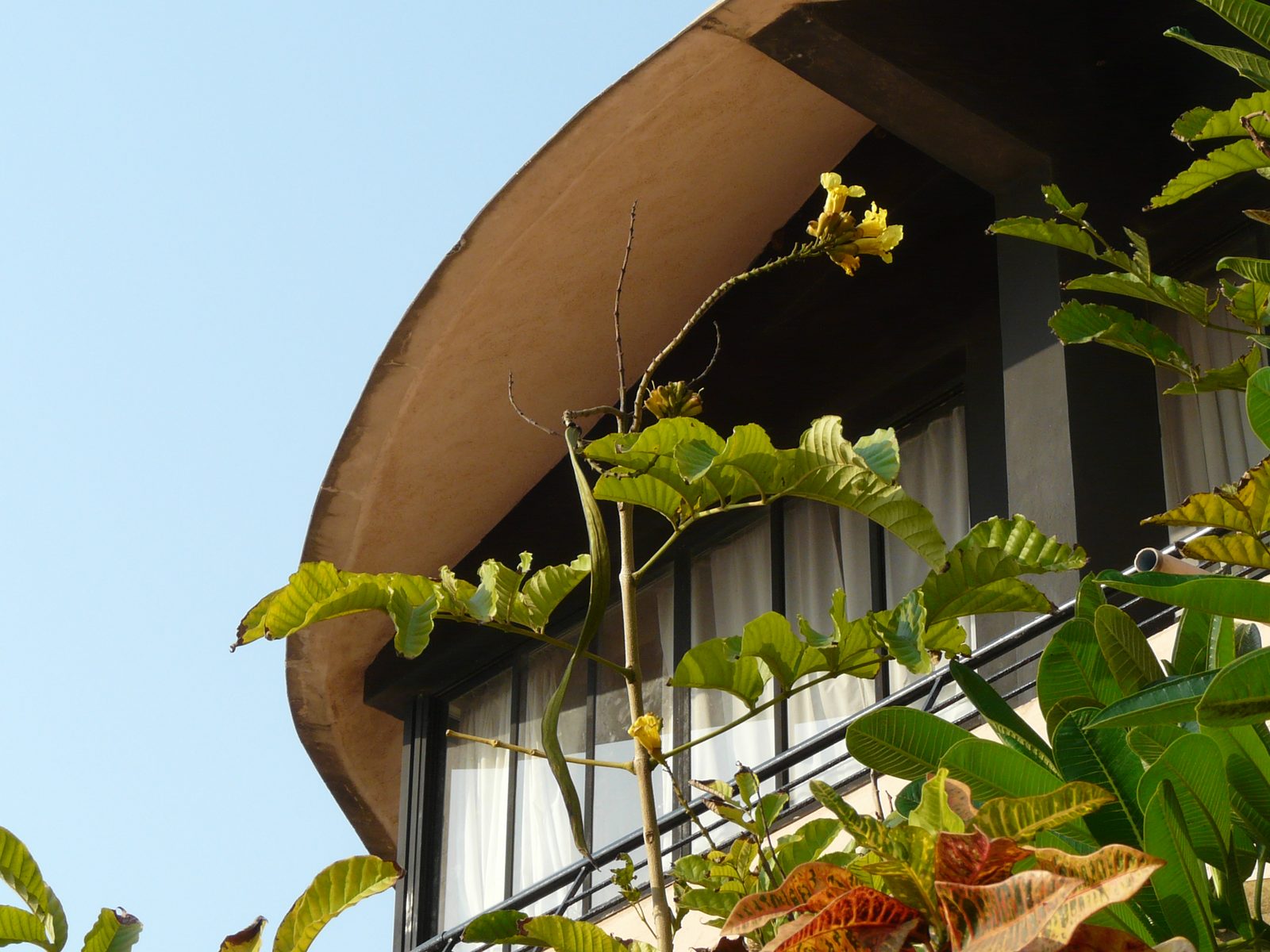
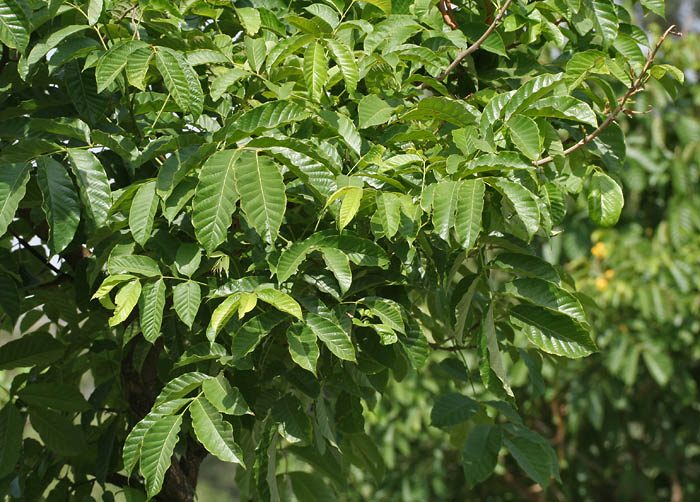
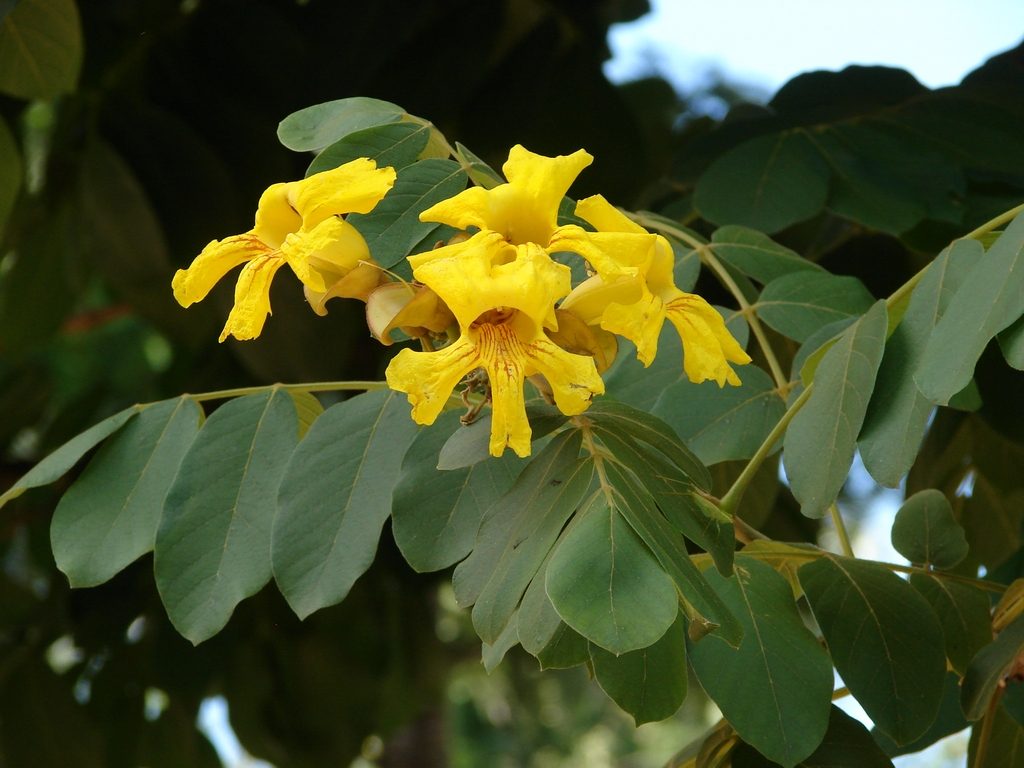
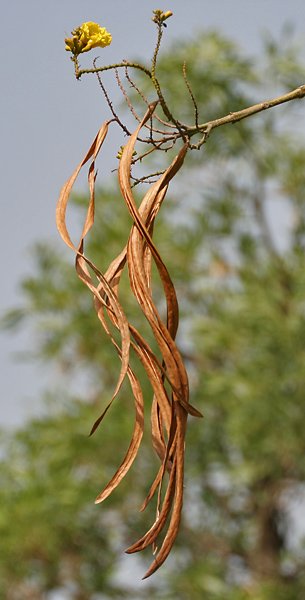
An evergreen tree (10-15m, up to 25m) with bright yellow, orange-throated trumpet flowers clustered at branch tips, and extremely long, thin, spiralling seed capsules - one of Rwanda's most dominant agroforestry trees.
- Kinyarwanda name
- Umusave
- English name
- Nile Tulip
- Scientific name
- Markhamia lutea
- Family
- Bignoniaceae
- Conservation status
- Least Concern (IUCN)
Habitat
Evergreen forest, riverine forest, forest edges and wooded savanna at 600-2,400m, on well-drained loamy/red soils.
Distribution
West Tropical Africa east to Kenya/Uganda, south to DR Congo and Tanzania; among the most dominant agroforestry trees in Rwandan farmland.
Uses
Wood, building poles, spoons, tool handles and knife sheaths; traditional medicine (leaves, bark, roots) for toothache, stomach-ache and headache, plus cough, asthma and gonorrhoea.
Ecological importance
Fast growth and nitrogen-poor-soil tolerance make it valuable for erosion control and windbreaks; flowers provide nectar/pollen supporting bees and apiculture.
Ibisobanuro
Kubaka, kubazamo inkongoro, indosho, imidaho, etc. Kirinda umuyaga, kivangwa n'imyaka.